Soil Testing in Oklahoma: The Risks, the Solutions & the ROI
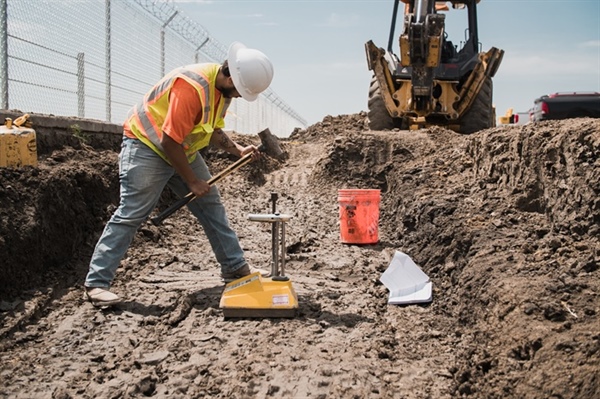
Oklahoma is experiencing incredible growth. From booming commercial corridors in Tulsa to expansive industrial developments surrounding Oklahoma City, the state's skyline is rapidly evolving. But when it comes to commercial and infrastructure development in the Sooner State, what lies beneath the surface is just as important as the structure built on top of it.
Oklahoma’s iconic “red dirt” might be visually striking, but for civil engineers, architects, and construction managers, it presents a notoriously volatile geotechnical environment. The state's soil is highly reactive to its climate extremes, creating a continuous cycle of movement that can tear apart improperly engineered structures.
Consider the challenge of constructing a 50,000-square-foot commercial manufacturing facility. During Oklahoma’s intense spring storm season, the clay subgrade can absorb massive amounts of water, swelling upward with incredible force. Months later, when the August drought hits and temperatures consistently top 100°F, that same soil rapidly loses moisture, shrinking and leaving deep voids beneath the foundation.
Without site-specific soil data and proper geotechnical foresight, builders frequently encounter "slab curling," where the edges of the concrete slab warp upward as the perimeter soil dries out faster than the soil beneath the center. This differential movement can misalign heavy equipment, jam loading dock doors, and cause expensive tilt-wall panels to crack under the stress.
With our continued expansion and commitment to reliable land development expertise across the region, Terradyne is here to help Oklahoma developers mitigate these risks from the ground up.
Oklahoma’s Greatest Geotechnical Challenge: Expansive Red Clay
Much of central and western Oklahoma is built atop Permian-age red bed formations. This means the soil is heavily concentrated with expansive clays rich in montmorillonite and illite minerals. These highly plastic clays are infamous for their extreme "shrink-swell" behavior, which is only amplified by the state's unpredictable weather patterns, similar to soils in Texas.
The Swell
During heavy spring rainstorms, the soil acts like a sponge. Montmorillonite clay can expand up to 15 times its dry volume, exerting upwards of 10,000 pounds per square foot of upward pressure (heaving) against concrete slabs and footings.
The Shrink
Conversely, during scorching summer droughts, the clay rapidly shrinks. This creates deep fissures — sometimes inches wide — and pulls the soil entirely away from foundations, removing critical structural support.
Common Construction Problems in Oklahoma Soil
If a project is built without accounting for the site's specific Plasticity Index, the extreme wet-dry cycles will quickly take a toll. Unmitigated expansive soil leads to:
-
Differential Settlement: Sections of a foundation shifting unevenly, causing floors to slope, underground plumbing to shear, and masonry walls to develop diagonal stair-step cracks.
-
Structural Damage: The constant cycle of heaving and settling creates immense stress, leading to misaligned door and window frames, cracked grade beams, and compromised crawl space supports.
-
Pavement Failure: Premature cracking, joint displacement, and buckling of parking lots and sidewalks due to highly plastic subgrade movement beneath the asphalt or concrete.
Crucial Soil Testing Needed for Oklahoma Sites
To successfully build on Oklahoma soil, guessing isn't an option. Terradyne utilizes comprehensive field sampling and advanced laboratory testing to take the uncertainty out of your site’s subsurface conditions. Essential pre-construction testing for Oklahoma sites includes:
-
Atterberg Limits: Because clay is so prevalent here, determining the soil's Plasticity Index (PI) is critical. Soils with a PI above 20 are highly expansive, and many Oklahoma sites easily test into the "very high" expansion category of 35–55.
-
Moisture Content & Swell Testing: This measures the amount of water currently in the soil and precisely calculates how much the soil will heave when fully saturated.
-
Proctor Compaction Test: Establishes the maximum density and optimal moisture content needed for proper on-site compaction to prepare building pads effectively.
-
Unconfined Compressive & Triaxial Shear Tests: These tests simulate complex stress conditions to determine the exact load-bearing capacity of the soil beneath your planned foundation.
The Terradyne Solution for Oklahoma Soil Testing
Terradyne brings nearly 30 years of trusted ingenuity and solution-driven results to every project. We don't just hand you raw data; our engineers thoroughly evaluate the conditions to provide practical, economical design recommendations.
Fast, Accurate Reporting
Subsurface issues often cause budget-breaking delays. We utilize efficient on-site drilling and sampling services paired with our highly accredited laboratories to deliver comprehensive geotechnical reports in a rapid 2-3 week turnaround.
Foundation & Structural Solutions
Depending on the severity of the shrink-swell potential, we provide site-specific criteria for foundation type and depth. For Oklahoma sites, we routinely recommend solutions like post-tensioned slabs (which use steel cables to keep the concrete under constant compression, resisting soil movement) or deep pier-and-beam foundations to anchor structures safely below the volatile active moisture zone.
Soil Stabilization
Our team often advises on chemical stabilization (like lime or cement mixing), moisture control barriers, and optimal grading strategies to neutralize expansive clays before the first yard of concrete is ever poured.
The ROI of Soil Testing in Oklahoma
To some developers, geotechnical testing might look like just another line item on the pre-construction budget. However, in a state with soil as reactive as Oklahoma’s, it is one of the highest-ROI investments you can make for your project.
Preventing Catastrophic Repair Costs
Repairing a failing commercial foundation, injecting polyurethane foam to lift a sinking slab, or installing retrofit steel piers after the building is occupied can cost tens to hundreds of thousands of dollars. These remediation costs far exceed the initial investment of a comprehensive soil report.
Eliminating Over-Engineering
Without precise subsurface data, structural engineers are forced to use ultra-conservative, "worst-case scenario" designs to protect their liability. Accurate soil data allows for precise, value-engineered foundation designs that can save your project significant amounts of money on unnecessary concrete, steel, and excavation costs.
Smooth Financing & Permitting
Commercial lenders, insurers, and municipal inspectors often require comprehensive geotechnical reports to approve funding, assess risk, and issue building permits. Having a certified Terradyne report in hand streamlines your path to breaking ground.
Ensure Your Construction Project Is OK with Terradyne
Whether you are breaking ground in Oklahoma City, Tulsa, or anywhere in between, don't let unpredictable red clay dictate the success of your project. Partner with Terradyne’s geotechnical experts to ensure your site is thoroughly evaluated and engineered for longevity.
Contact our team today to schedule a site consultation, and let us provide the clarity and engineered solutions you need to build with absolute confidence.