Colorado Soils: How to Test for the Biggest Risks & the Best Solutions for Developers
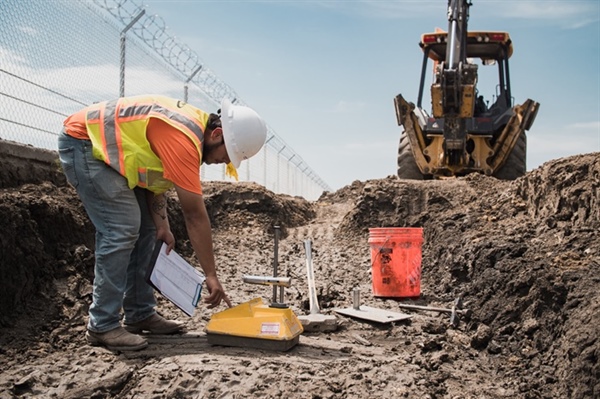
Colorado’s booming real estate and commercial development markets offer incredible opportunities, from the busy Front Range to the expanding Western Slope. But beneath the stunning landscapes lies a complex, often volatile geological environment. Just as Texas developers must contend with deep, shifting clays, Colorado builders face their own underground adversary: some of the most destructive and unpredictable soils in the country.
For developers, ignoring what lies beneath the surface isn’t just a structural risk — it’s a massive financial and legal liability. Colorado law mandates strict geotechnical reporting and disclosures for a reason. Here is what you need to know about the unique challenges of Colorado soils, the red flags to watch for, and how the right testing and engineering solutions can protect your investment.
What Sets Colorado Soils Apart?
Colorado’s climate and geology create a perfect storm for foundation failure if sites aren't properly researched, tested, and geotechnically engineered. Developers typically face three primary soil hazards.
Expansive (Swelling) Soils
This is the most significant, widespread, and costly geologic hazard in Colorado. Soils along the Front Range are rich in bentonite, a smectite-group clay that acts like a sponge. When exposed to moisture from rain, snowmelt, or irrigation, bentonite can expand by up to 20% in volume.
This generates "swell pressure" that can reach 30,000 pounds per square foot — easily enough to lift multi-story structures, heave concrete slabs, and snap reinforced foundation footings.
Collapsible (Hydrocompactive) Soils
Common on the Western Slope and in certain Front Range areas, these low-density soils are strong when dry but rapidly collapse when introduced to water. The soil grains essentially dissolve or shear, causing the ground to settle or sink rapidly, taking your foundation with it.
Subsidence
Ground subsidence, or sinking, is a historical hazard in Colorado. While it can occur naturally, the primary concern for developers is the settling of ground over abandoned, unmapped coal and clay mines, particularly around older municipal boundaries.
Red Flags for Developers
Catching soil issues early can save millions in construction defect litigation and structural remediation. When evaluating a site or observing nearby structures, look for these physical warnings of unstable soil:
-
Site Topography: Look for "gilgai topography" (unnatural mounds and dips in the earth) or wide, deep cracks in the dirt during dry spells, indicating high shrink-swell potential.
-
Existing Concrete Damage: Heaving sidewalks, stair-step cracks in brickwork, or severe cracking in nearby driveways and garage slabs.
-
Drainage Issues: Water pooling naturally on the site. Since both expansive and collapsible soils are triggered by changes in moisture content, poor natural drainage is an immediate red flag.
-
Interior Signs in Nearby Builds: If assessing an area with existing properties, sticking doors, uneven floors, and diagonal drywall cracks from window corners indicate active soil heave.
Essential Soil Testing for Colorado Developers
You cannot build a standard shallow slab foundation in Colorado and hope for the best. To comply with Colorado Revised Statutes (which mandate specific soil disclosures to buyers) and protect your build, comprehensive geotechnical testing is required.
1. Deep Soil Borings (Core Drilling)
Because the "active zone" (the depth to which seasonal moisture changes affect the soil) can be quite deep in Colorado, core drilling is essential. This helps geotechnical engineers determine the depth of bedrock and extract undisturbed samples of the soil layers above it.
2. Swell-Consolidation Testing
Engineers subject soil samples to the exact loads they will face from your proposed building, then inundate them with water. This measures the precise percentage of expansion or collapse that will occur when the site eventually gets wet, allowing for accurate foundation design.
3. Atterberg Limits Testing
This test determines the Plasticity Index (PI) of the soil, which helps categorize just how reactive the clay is to moisture changes. High PI numbers mean high risk.
Engineering Solutions for Colorado Clients
Finding expansive or collapsible soil doesn't mean a site is undevelopable — it simply dictates the engineering approach. At Terradyne, we help developers implement proven solutions to mitigate these risks:
-
Over-Excavation and Replacement: For shallow problem soils, the most effective solution is often to remove the expansive clay (sometimes 10+ feet deep) and replace it with engineered, moisture-conditioned structural fill.
-
Deep Foundation Systems: Instead of shallow footings, structures are supported by drilled piers (caissons) driven deep into stable bedrock. The building is suspended on a grade beam, creating a void space beneath the structure so the soil can expand without pushing against the house.
-
Post-Tensioned Slabs: For certain residential and commercial developments, heavily reinforced post-tensioned concrete slabs can be designed to resist the bending forces of expansive soils, moving as a single rigid monolith rather than cracking.
-
Moisture Control: Implementing aggressive grading (a minimum 5% slope away from the foundation), sub-surface perimeter drains, and strict landscaping moisture controls to keep the soil's water content stable.
A Solid Colorado Build Starts With Confidence in the Soil
Colorado's soils are notoriously difficult, but they don't have to derail your project. By partnering with an experienced geotechnical engineering team early in the site acquisition phase, you can identify the risks, design the right foundation, and build with confidence.
Reach out to Terradyne today to schedule comprehensive soil testing and site evaluation for your next Colorado development.