How to Interpret Construction Materials Testing Reports
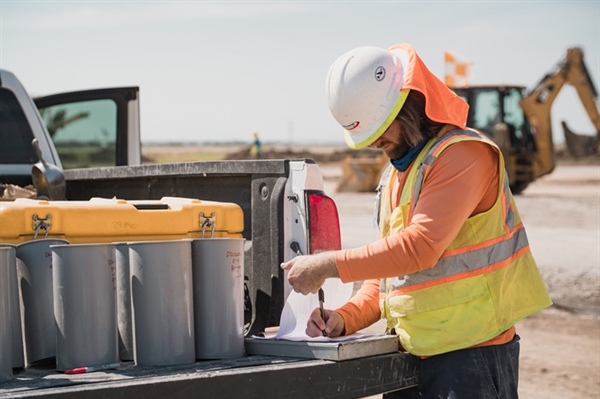
Construction Materials Testing (CMT) is the definitive measure of whether your site materials — including soil, concrete, aggregate, steel, and asphalt — meet the structural, safety, and performance standards outlined in your project specifications. For developers, contractors, and project owners, understanding a CMT report is not just a matter of regulatory compliance; it is the ultimate safeguard against catastrophic financial and physical failures.
Just imagine if a multi-story commercial development had its concrete foundation poured without rigorous on-site testing. If that concrete cures but fails to reach the required compressive strength, or if the reinforcing steel inspections were improperly documented, the consequences are severe. The entire project schedule halts, millions of dollars are tied up in structural demolition and re-pouring, and investor confidence evaporates.
Properly interpreting a daily CMT report catches these exact vulnerabilities in real time, allowing project managers to correct a bad concrete mix or under-compacted soil before the structure goes vertical. Quality materials and workmanship determine the success of every construction project, and a comprehensive CMT program acts as the eyes and ears on the construction site to ensure those standards are met.
The Anatomy of a CMT Report
A standard CMT report provides daily or batch-specific results comparing field and laboratory tests against ASTM standards, TXDOT test methods, and specific project parameters. The data presented will dictate whether work can proceed to the next phase or if immediate remediation is required.
Soil Compaction & Moisture-Density
Before a foundation is laid, the ground must be prepared. CMT reports detail soil compaction testing and inspection results to show the moisture-density relationship of the subgrade. If the field density percentage falls below the specified requirement (often 95% or 98% of the maximum dry density), the soil is under-compacted. Building on under-compacted soil introduces severe risks of settlement, shifting, or total foundation failure.
Concrete Compressive Strength & Slump
Concrete testing evaluates the material's workability (slump) in the field and its structural sufficiency via cylinder breaks in the laboratory. The report will detail the pounds per square inch (PSI) achieved at specific curing intervals, typically at 7, 14, and 28 days. Low compressive strength results generally indicate a flawed mix design, excess water, or improper curing conditions on site.
Reinforcing Steel & Post-Tension Cable Inspections
Structural integrity relies heavily on internal support. CMT reports document reinforcing steel and post-tension cable inspections to ensure the layout, spacing, and tensioning match the structural engineer's blueprints.
Asphalt & Aggregate Testing
For paving and flatwork projects, CMT reports track the compaction density of the asphalt laydown, aggregate gradation, and concrete and asphalt testing. Poor density or improper aggregate sizing results in pavement rutting, severe cracking, and premature failure under heavy traffic loads.
Specialty Inspections
Depending on the project scope, the report may also include data on structural masonry testing, water and chemical injection inspections, and fireproofing materials inspections.
What to Do When Results Fall Short
When a test result does not meet the specified criteria, the CMT report will flag the deficiency. Contractors must halt the affected phase and consult immediately with the project manager and engineering team. Effective communication and rapid coordination are pivotal here; project plans, specifications, and ASTM test methods must be readily available to field personnel to course-correct.
Soil Compaction Failures
If soil compaction fails, the solutions vary based on the severity and site conditions. The
contractor may need to perform over-excavation to remove unsuitable soils, adjust the moisture content and re-compact, or utilize water and chemical injection to stabilize the subgrade.
Concrete Issues
When concrete cylinder breaks reveal low compressive strength, remediation becomes highly time-sensitive. The engineering team may require additional curing time before re-testing, or they may order structural coring of the poured concrete to verify if the field batch is genuinely deficient. If the concrete cannot support the designed load, solutions range from applying localized structural patching and reinforcements to a complete "rip-and-replace" of the affected pour.
Steel & Masonry Deficiencies
For steel and masonry deficiencies, such as improper rebar spacing or insufficient post-tensioning, adjustments must be made before the concrete pour. If flagged during a masonry inspection, the contractor may need to rebuild specific wall sections or add supplemental structural supports to distribute the intended building loads safely.
Working with an experienced CMT team ensures that when these issues arise, they are met with rapid coordination between the field personnel, project team, and the geotechnical department to formulate capability procedures and fast solutions.
Partner With Experts for Guaranteed Quality Assurance
Test accuracy relies entirely on the quality of the testing equipment and the personnel performing the tests. Terradyne utilizes top-quality equipment calibrated regularly to manufacturer recommendations and industry best practices. With AASHTO-accredited laboratories in Round Rock and Carrollton, TX, alongside an A2LA-accredited laboratory in Houston, our highly trained engineers deliver unimpeachable quality control.
Terradyne operates as a certified Minority/Disadvantaged/Small Business Enterprise and Historically Underutilized Business (MBE/DBE/SBE/HUB), and our in-house staff provides expedited recommendations and a 2-3 week turnaround time for fast-track project scheduling.
Do not let poor materials derail your construction timeline or budget. Secure your project's foundation by calling 817-952-7217 or schedule a consultation for construction materials testing services today.